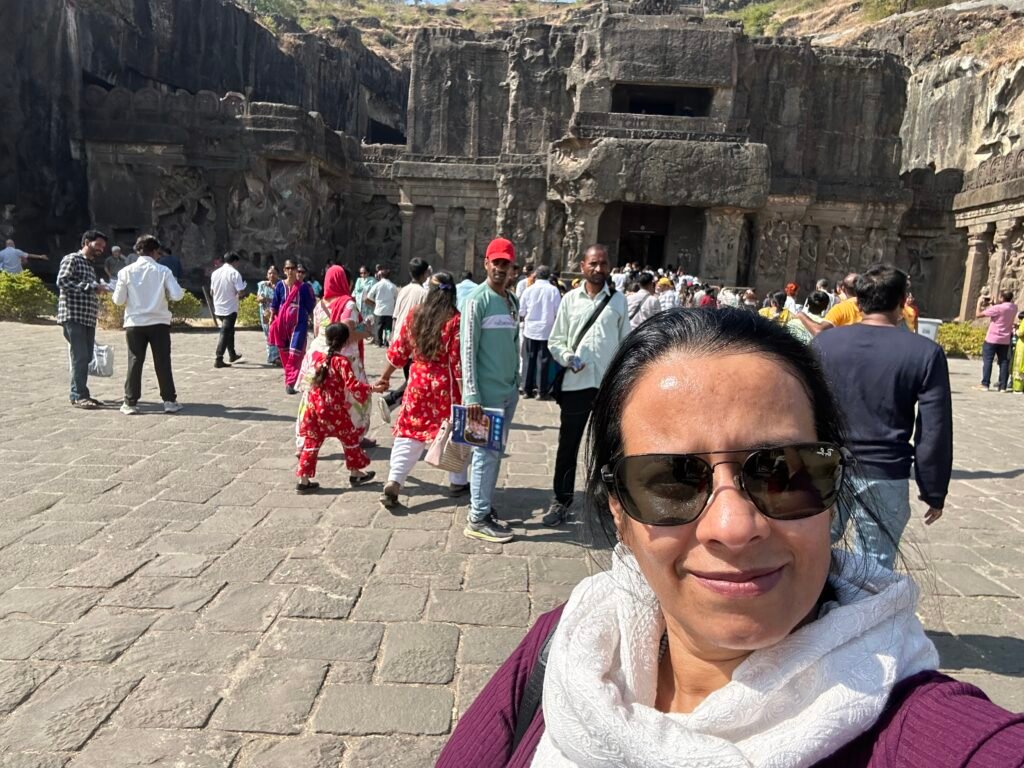
The Ajanta and Ellora Caves , Maharasthra , INDIA . 26-29 December 2025
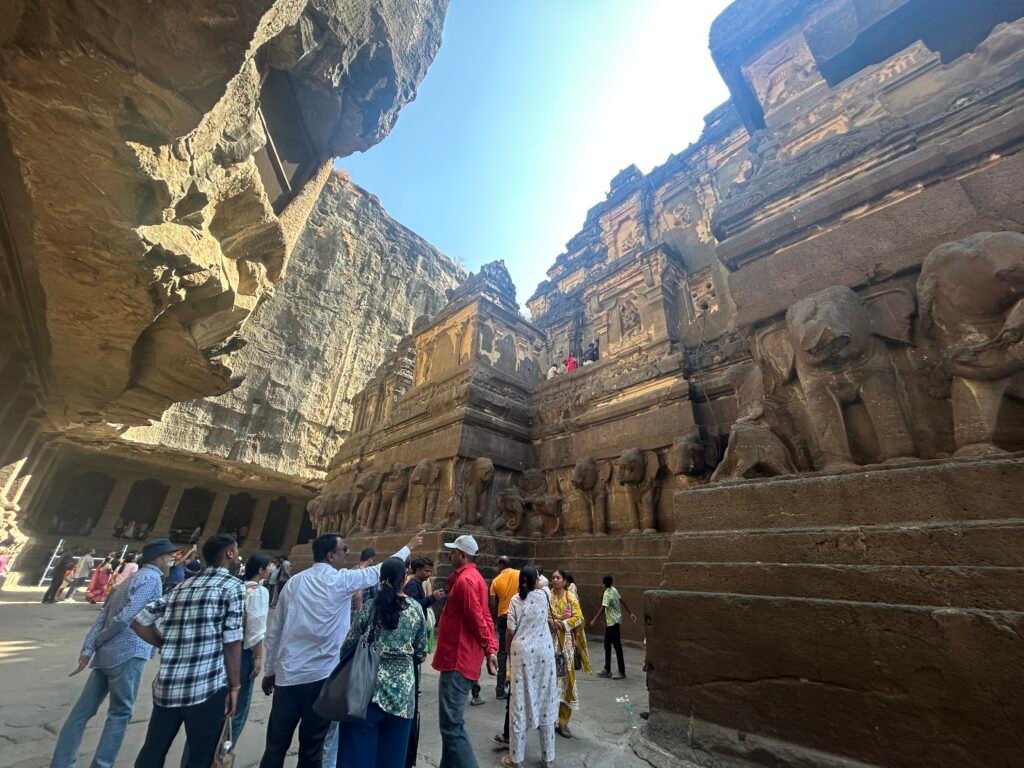
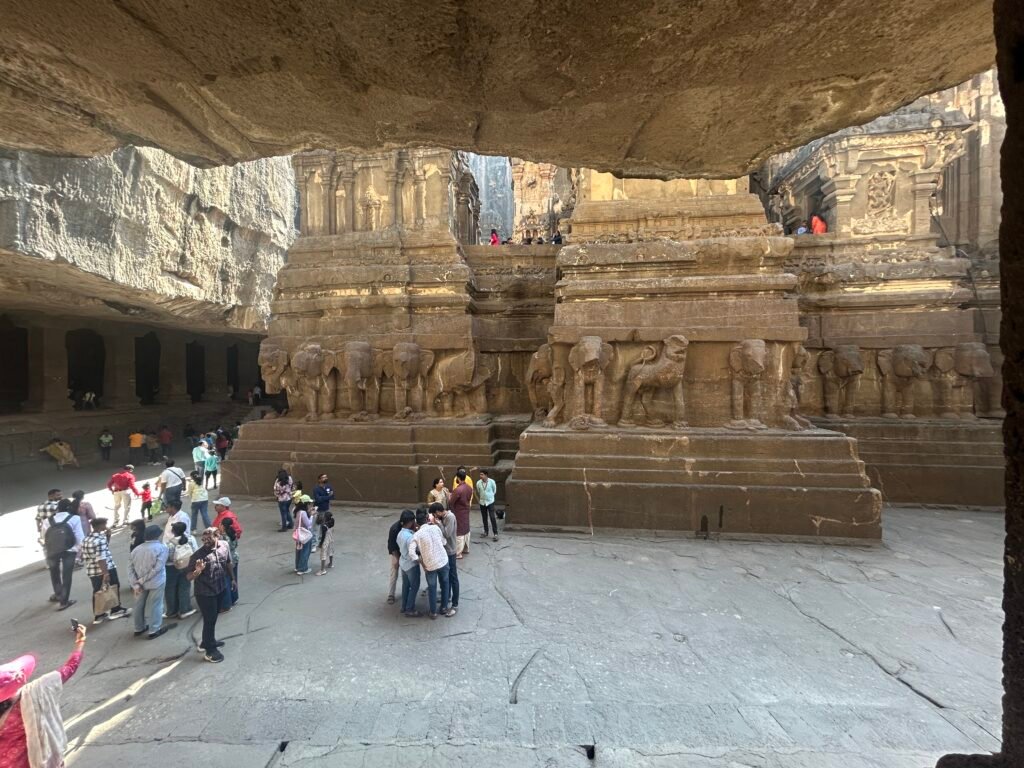
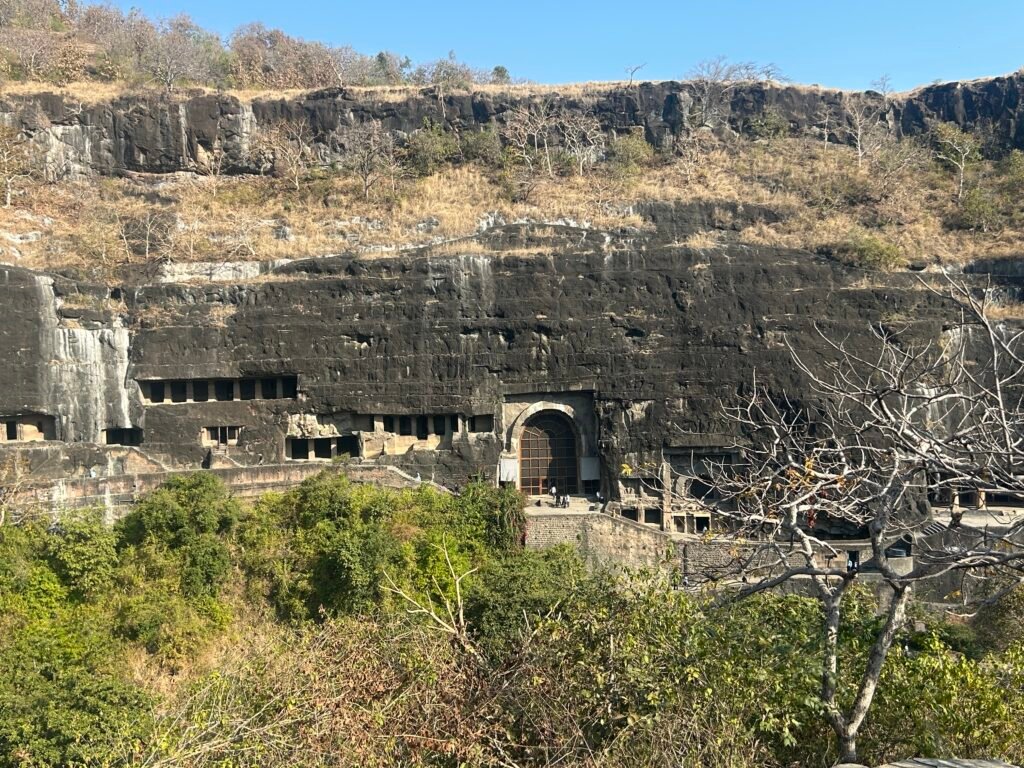
View from the Cave 16 (Kailasha temple) , Ellora
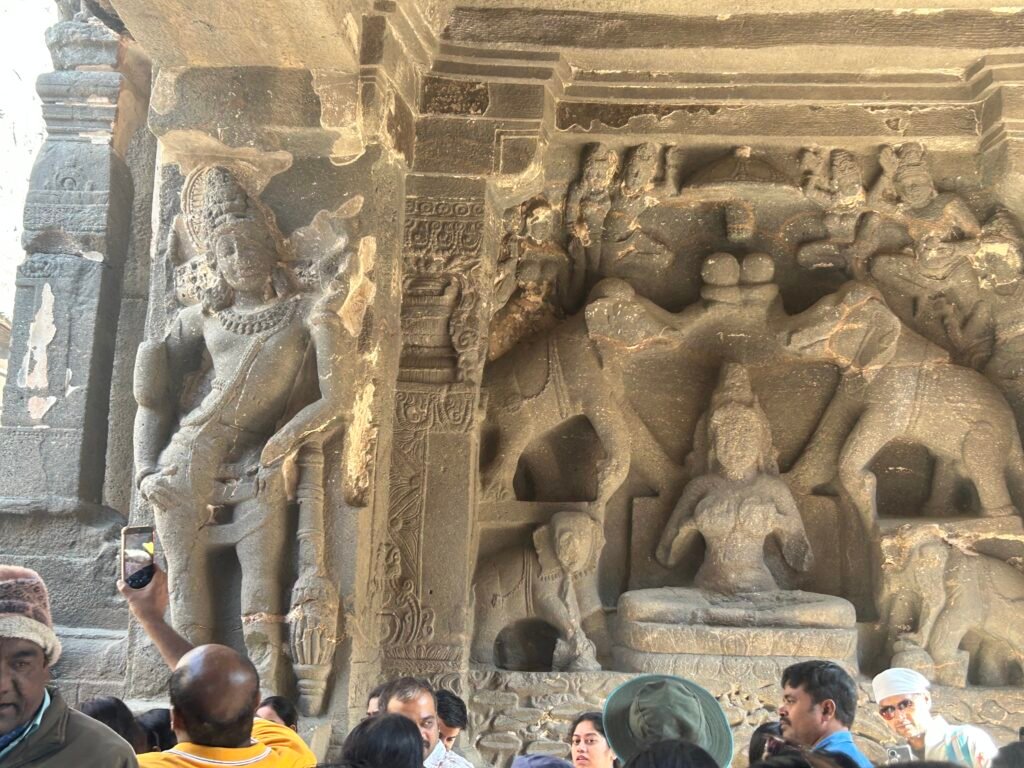
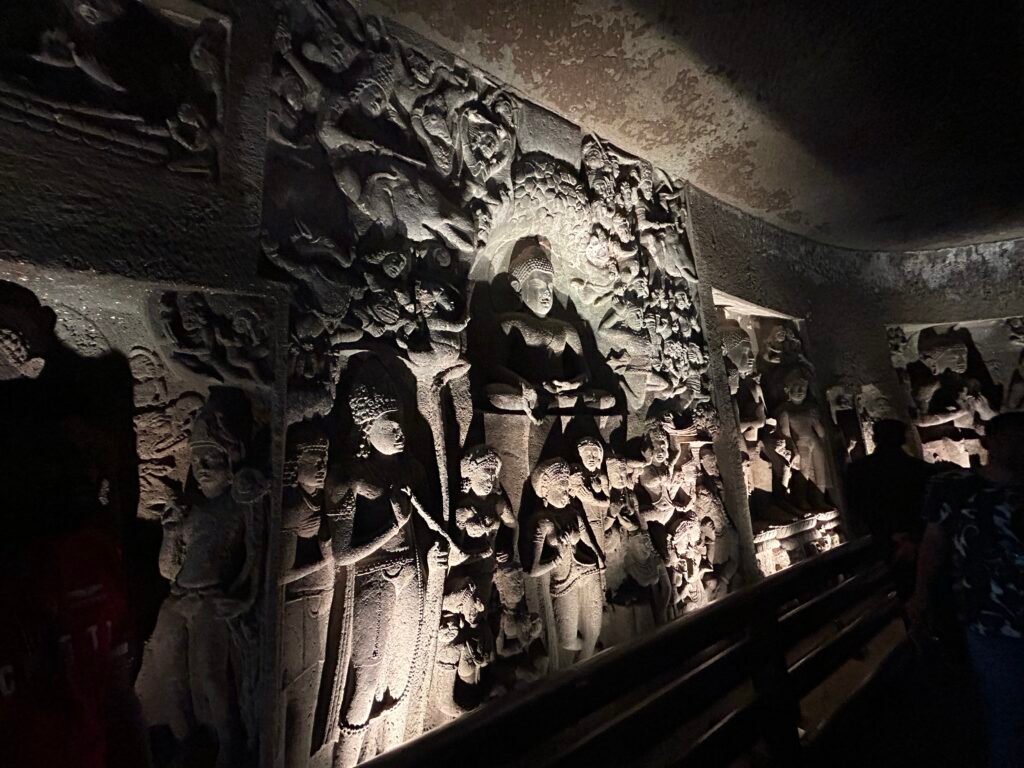
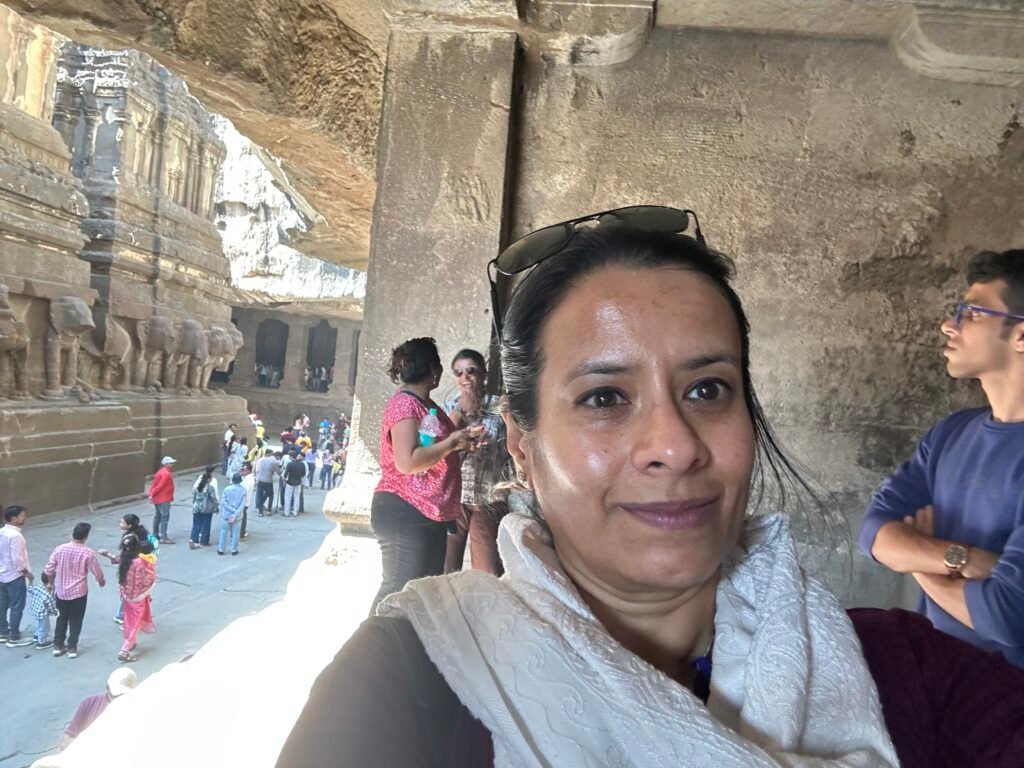
Inside Ellora
Cave number 26, showing hindu deities , Ajanta
The cave temples of Ajanta and Ellora are 2000 and 1800 years old respectively, and a UNESCO protected site . It got discovered back in 1875 accidentally by a British officer while hunting in the forests of Deccan plateau in India .
Ajanta is around 110 kms away from Aurangabad , Ellora is 32 kms approx from city .
Both these cave temples stands testimony to pluralistic life in India in 2nd BC !
What led me to Ajanta -Ellora of India ?
The name goes back to reminisces of my school days and reading grade 6-8 history books which had back cover of the Ajanta and Elllora statues and paintings! Since then have been nursing to see these caves . This was again my solo trip .
Ellora was slightly easier to reach and cover , being the largest monolithic cave temple in World ! A single rock cut temple -cave number 16 , the Shiva temple. It doesn’t look like a temple – rather a george like huge ancient mini city with sprawling artefacts and rock sculptures – all shaped to perfection and precision !
As you will enter this cave , you will be spell bound by the expanse and the magnificence !
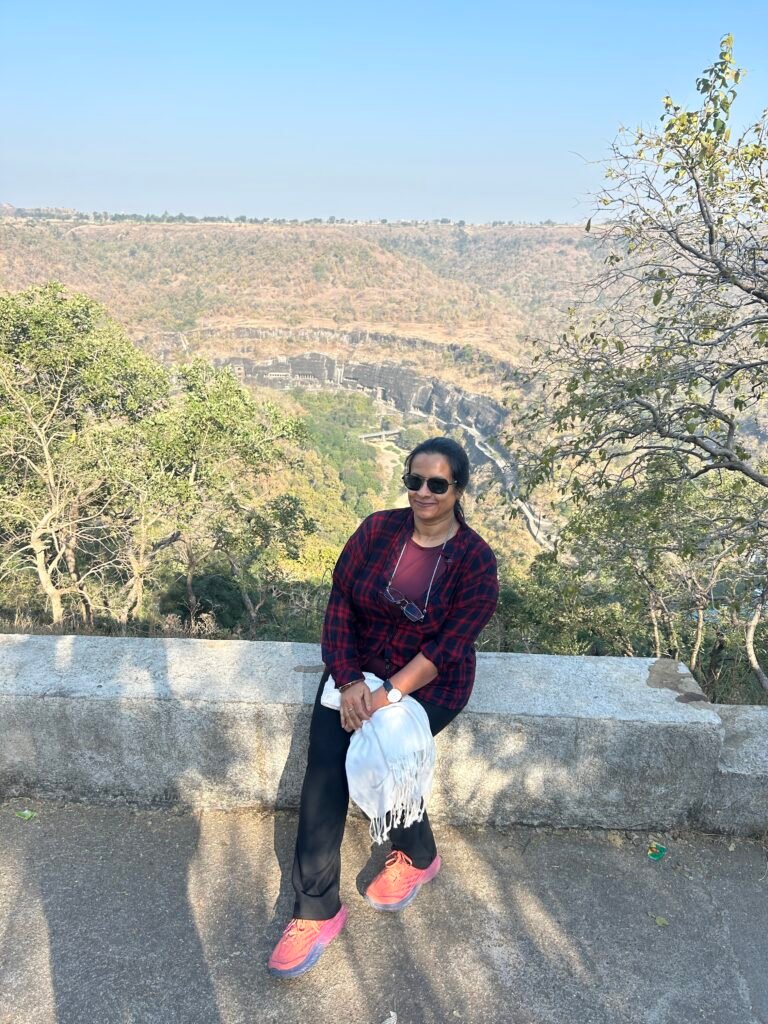
Ajanta is definitely a more difficult journey, with two approach ways – you could either trek down from the ‘Ajanta -view point’ – which is the uppermost part of the deccan plateau from where you could see the entire caves from a height and then trek down with help of a guide through the forests and plateau( a easy-mid level trek) , but would highly reccomend this to those looking for the real experience of decoding ‘Ajanta’ !
The other way is to get dropped off at the Ajanta main entrance site by your cab . From there hop into a bus plying every few minutes to drop you till the entry site (since its a 10 mins steep uphill from car park ) . From here too be prepared for a lot of walk .
Reach Ajanta by 9 am , so start atleast 2-3 hours from Aurangabad . It gets hot and sunny . Enjoy the early morning breeze and pristine sounds and sights and fragrances of the forests of Ajanta listening to the stories of your guide ! Do pre-book a guide (online) for Ajanta .
A bit Of History before proceeding
The sites were accidentally discovered by John Smith, while chasing a tiger with his troops in the dense forests. So what led to the Ajanta getting ‘hidden or ‘lost’? For this we need to know what led to the creation of Ajanta !
The Ajanta cave temples (some 32 in count, however only 26 open for tourists), were built over 96 years in different phases by different dynasties in India . These were built by the kings initially to spread buddhism to common folk and the practices of ‘Dhamma’. We also see Jain and Hindhu paintings and sculptors here . This proves that India was pluralistic then. End of every era or death of a king led to incomplete cave temples (as we would see interestingly)! Every new ordained king started creating a ‘new cave’ ! Hence so many caves 🙂
Later as kingdoms started to dwindle and new villages started cropping up , the kings slowly stopped building (Also due to paucity of resources, and the difficulty to reach here (Be there to be amazed at how such a creation could exist in such a difficult to reach terrain).
So eventually the Buddhist monks started using Ajanta cave complexes as their ‘Viharas’, meditation centres , and ‘resting place’ and spend monastry life on their way from one place to other !
The creation of these rock cut shelters was driven by deep religion and cultural motivations !
Ellora , which is also a UNESCO World heritage site is spread over many acres of land . The largest and most prominent one is Cave number 16 , which is right at the entrance of site . Caves 1- 2 are Buddhist caves, 13-29 are Hindu religious caves, and 30-34 are Jain temples side by side .
Ellora was crafted during 6 and 12 CE , under the Rashtrakutas , Chalukya and Yadava dynasty
Heads Up & Tips
Carry a Sun hat, sunshades, comfortable shoes and water bottled with you . Ellora has many quick bites places around the site. You may love to savour the black juicy Sugarcane juice or fresh coconut water of Maharashtra belt before you enter the Ellora Complex! Me chose the former.
Spend some 2 hours at the cave number 12. Then exit from the same point and have a nice lunch at Kailasha hotel which is government run eat place. As I entered the Cave 16, was awed by the magnificent rock statues size and finesse! The more I walked around exploring the huge cave complex – the beauty and size and the grandeur bewitched me! Just kept wondering, that it takes gigantic, imported machinery today by Indians to make a simple bridge on mountains, or even drilling into a tunnel. How on earth did the Indians make this monolithic largest cave temple in World during 6 and 12 CE!? What did they have which we don’t have today? Were the ancient men more advanced and creative and competent than mankind today in the ‘AI era’!? All these mystical questions, while in a daze looking at the statues, I didn’t realise 2 hours had passed just in the Kailasha Cave!
Pre book your online tickets for Ellora, or pay 20 INR (Indians) at counter . Try to avoid holidays, weekends, and be there by 9 am ! There is a single entry and exit to the caves and during rush hour one can get off guarded and stuck in stampede . Early mornings you may be able to walk and marvel at the intricate sculptures better .
I exited around 2 pm …. which is again 500 metres roughly walk across shaded paths surrounded by trees and lawns from the caves to the entrance point where I dropped of my car . As informed by the driver, I went to Kailasha . Here savoured on a Thali for lunch which was spicy, true to the taste of Aurangabad!
After great pictures and moments, we made our return to main city to see ‘Bibi ka Maqbara’…. which is Aurenzeb’s begum’s tomb. Also, on the way stop over to see outlets where the famous Paithani Sarees are made! Also learnt of the ‘Himroo’ sarees which are hand crafted out of a silk loom, having the Ellora motifs as design.
From here we stopped at a famous mishtan stop, savouring Aurangabad ka Chai’. Being a Dilliwasi I did not expect a great tea! Was so surprised to find this masala tea awesome! the only thing that intrigues me is the quantity! For tea lovers like me this quantity was like a torture and the tall glass size with less than half tea was like a sob story. But the flavours of the great tea made it up !
Next stop was Bibi ka makbara some 20-30 mins. Huge crowd here too, also being evening expected it as well. Skipped going inside. The tomb is visible from the car from outside as well. I was out of steam by then, and chose to return to the hotel .
Ellora is the largest Monolithic temple in World !
Day 2 : Ajanta
Interesting drive of 2 hours Aurangabad-Ajanta , with the Sahadri mountains at back drop
So day 2 started at 6.30 am drive from Aurangabad. The drive will take you through the Sahyadri mountains at the backdrop and through cotton fields! Do take panorama pictures of yourself against the rising sun! Watch the cotton buds having flown from the fields into the roads.
Let me share that there are two ways to reach the Cave temples of Ajanta. After 2 hour and a 110 kms drive from Aurangabad, You have the option to get dropped off at the “Ajanta viewpoint” or take your cab till the Ajanta temple site directly. The viewpoint is on top of the valley from where you can have the glorious breathtaking view of all the caves and see how its strategically located in the middle of the dense Deccan forests. It takes about 30-45 mins trek through low -medium grade difficulty steps and rocky landscapes through forests to reach the final caves.
I took a local guide after getting dropped off at this viewpoint site! It helps to take a guide as he goes on to explain the history and stories behind the caves; also get charmed by the natural forests and step wise creation of the architectures! So, the guide told me that 3 things made the magnificent Cave carvings and paintings possible. Volcanic rocks, Waterfalls, direct sunlight. Take this viewpoint to cave trek road to understand the whys and how’s!
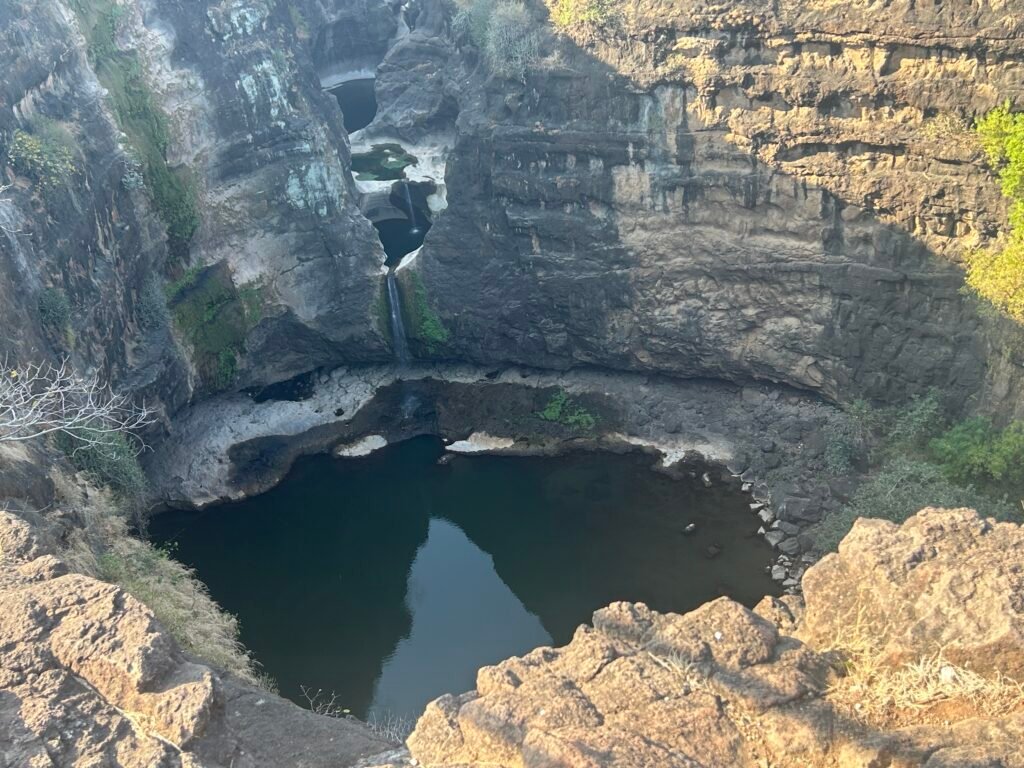
After walking down some 20 mins you will reach a flat valley of black basalt rocks! The view of the valley from here is breathtaking! Towards the opposite side pf the cliff you will see rocks with water falls and naturally created water reservoirs -naturally created by erosion of the water falls during monsoons. These “7 step wells”, seems like Gods creation of water supply for Buddhist values and philosophies to come to the common folk! That’s what I felt when I saw them atleast! Then comes the rocks …. these rocks have rich deposits of semi-precious stones like quartz, amethyst, jade, malachite. crystals which were ground to extract the dyes and pigments for the paintings! Ochres, black and green was used locally. Iron oxide and calcite, amethyst, Jade were richly found here! Then comes the forests. Do you know though every leaf is green, post grinding leaves release different colours!
En route the trek route till Ajantasite. Behind are the horse shoe shaped caves arranged . Do take this route to reach the site !
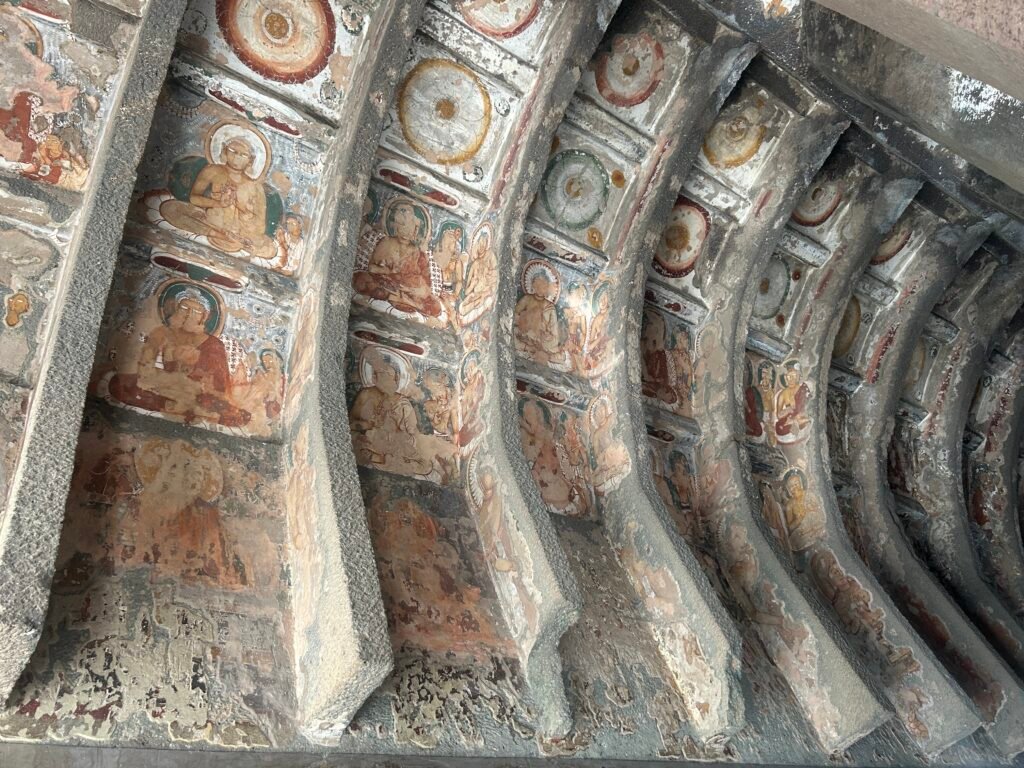
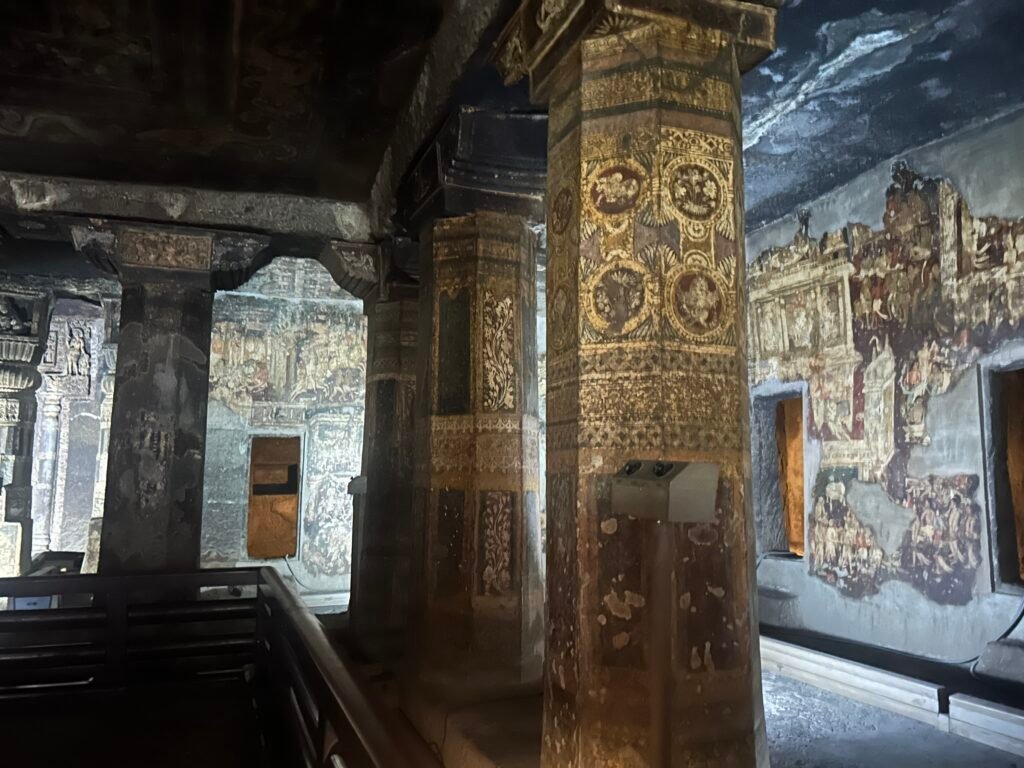
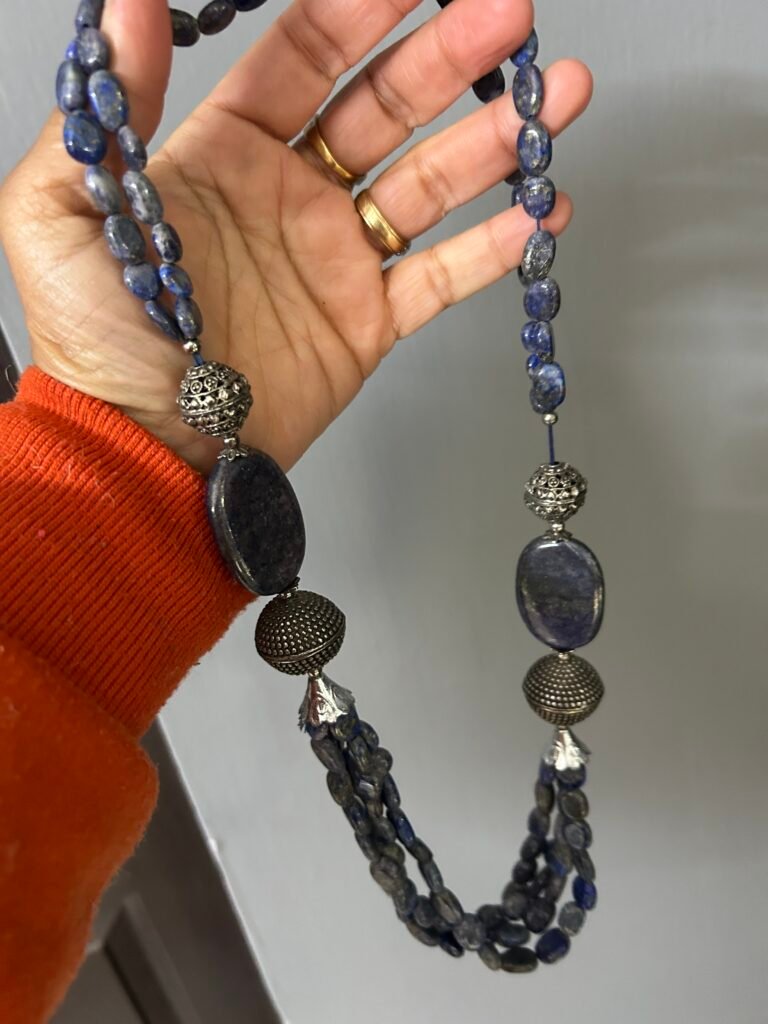
You really need to be here to see these colours on the paintings! These still speak stories of the bygone days and the finesse of the craftsmen of India! The richness of the paintings can’t be expressed in words. The Lapis Lazuli was imported from Afghanistan to get the ‘ultramarine’ colour. This colour has been used in a painting of ‘queens’ necklace’ in one of the caves ! Tip a guide to see that painting in the otherwise dark caves 🙂 .
Then comes sunlight and its angle of incidence on these caves. The caves are dark! So dark that you need a torch light to see the paintings. Though torch and flashlights are prohibited now in these caves to preserve them. So the paintings could be made by the local artisans by using a burning flame. But then the soot of the flame deposits would leave a thick deposit on these paintings too unfortunately! There too some divine presence works her hands 😊 . The sunlight penetrated directly into these caves on three periods through the day and it was synced accordingly by the locals for finishing the carvings and paintings. These could not be be done post sunset. There is another similar valley site nearby the Ajanta (as shared by my guide) , however which could not be used for the lack of these 3 divine interventions!
Take a guide through your trek with uncaptured stories on ajantha , and knowing the deatils of what made 'Ajanta' possible in 2 BC !
The name Ajantha comes from the nearby village ajintha during 2 BCE, from where the locals used to come for working on these caves. There’s apparently also a true love story between a village damsel and a British officer who used to come to the caves during the construction period ! Take a local guide from the viewpoint – and you might be glad to hear this story! Seems there has been a video released on this too few years back but was recalled back – for reasons unknown .
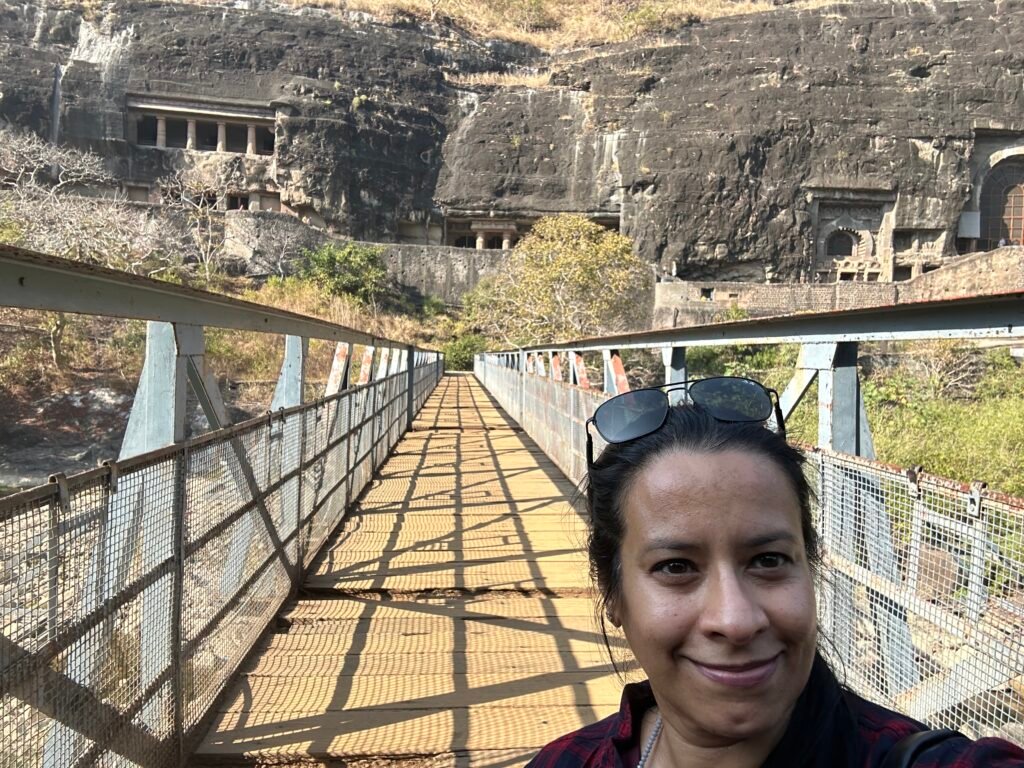
At the end of about 30-45 mins beautiful trek through dense forests and beautiful trees, flowering trees and scent of wildflowers and waterfalls you would reach the flat end into the valley . From here there is a cross over bridge which would take you to the opposite mountains where the cave temples are located. It’s a mere 2–5-minute easy walk-through bridge which takes you to the actual site. Listening to the stories by the guide and walking through the jungle almost made me feel as though transported to the era of 2BCE ! Very little has been restored or touched by civilization and it feels surreal to know about the richness of Indian art and magnificence of the artists!
The bridge end directly leads you to the ticket entry window located near cave number 8. It’s a 30 rupee ticket, and half ticket till 14 years. After taking the tickets start the tour from cave number 9 onwards towards the left direction onwards. Please note thar there are 26 caves are open for tourists ..though there are many more of these in the site ! To see all these would take anyone close of 3 Hours and a lot of adrenaline and hormones and calories ! It’s a bit tiring especially with the direct sunlight and warm temperatures. Carry your own water calories! Be light on luggage, wear comfortable shoes. A small tip you may skip a few temples, since some of them are unfinished and look similar, though if interested, its splendid!
Sun's angle of incidence into the caves , 7 water fall driven natural wells created during the monsoon and thock forests of Deccan plateau made Ajanta possible in 2 BC !
Start first with cave Number 8,9,11,2,17,18,19,26 …in one serial order towards the left side of the ticket counter and then go back to ticker counter (cave 8) and exit via cave number 1 . The caves are arranged in a horse show shape.
The bridge at the end of down hill trek which makes you cross over mopuntain ranges tp reach the Cave site ! How fascinating . Time 9.30 am . Post a 30 mins casual trek
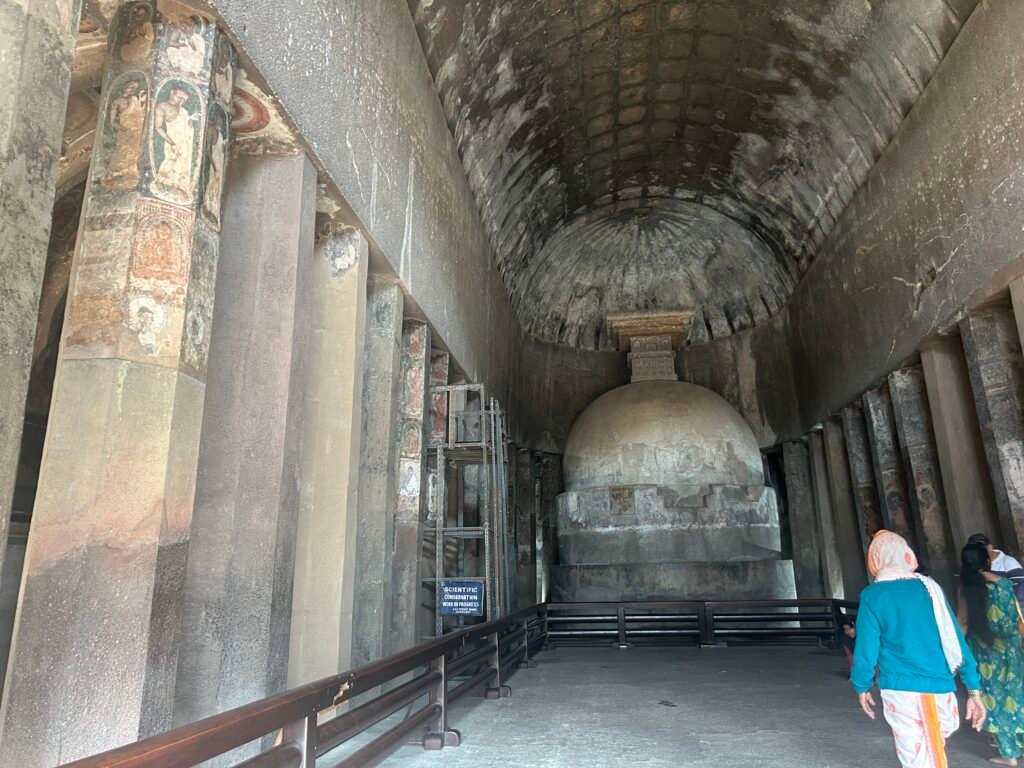
Cave number 9, possibly a meditation centre . Dont miss the natural dyes made motifs of the pillars and walls
Cave number 26, which holds so many stories of Buddhas life, Jataka tales. Take a guide with his torch light to fascinate and get you lost into the golden age !
I loved the story on the queen (maybe someone around 2 BC) , who gets a dream that she would bear a child , if the soldiers extract out all the tooth of a 5 teeth elephant ‘gaja’! So the next day the soldiers set out into forest.
Fortunately, one fine day they come across that ‘Gaja’! When they try to approach the wild elephant, they get astonished to find the elephant himself extract out his own tooth, bleeding itself profusely …….soon the soldiers realise that the elephant is a ‘Boddhisatva’ ………and they kneel at his feet with reverence! Many such kind of stories mostly from jataka tales and on Budha and prince Siddhartha depicted in paintings …. mesmerising it will feel!
Few of the caves were rest houses for Buddhist preachers, some were meditation halls, and few are viharas. Donot miss cave Number 9, 11, 26!
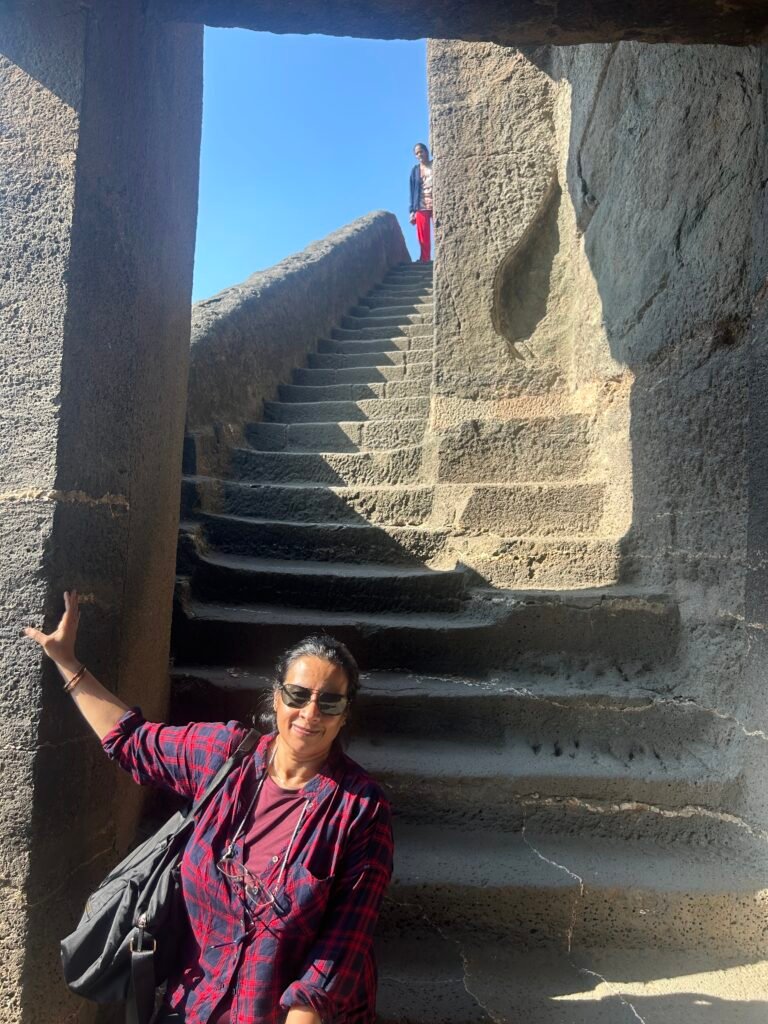
Reaching from one cave to next will take you through a few steps and climb up and down ....enjoy the rocks and go light with comfortable shoes
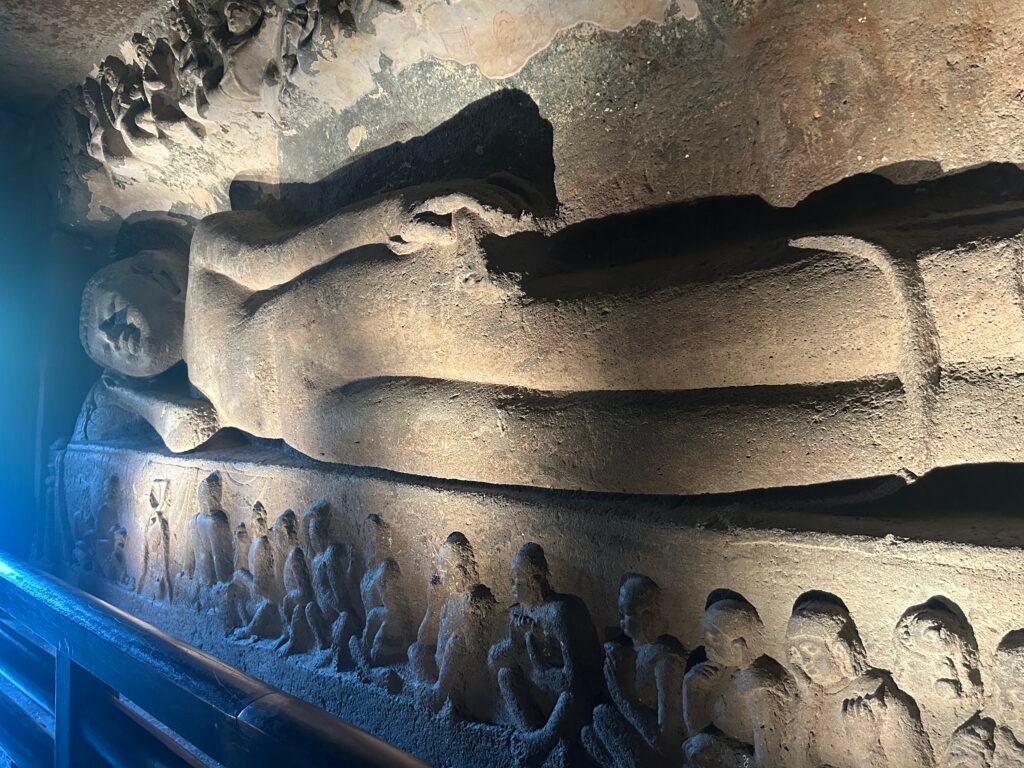
Budhha's mortal death depcted here and souls on top of his head in higher realms . Intriguing the size of the carvings !
Return back from cave 26 in reverse direction to cave number 1 for exit gate . Those reaching the cave site directly through cab will have to start watching cave number 1 onwards . While those reaching through trek route must start with cave 9 -26 onwards and then go back reverse.
Walk down from cave 1 to a great state tourism food and relaxation place , some 800 metres. Also shop the semi precious stone and crystal Indian jewelleries ……board the air conditioned bus and get dropped off to your car park !
Natural Lapis Lazuris neck piece !
Wrapping up all about the Mystery and History behind Discovery and making of The Ajanta!